Stools: what their colour, shape and smell can tell us
From black and red to green or yellow, the colour of your stools often reveals more than you might think. Are hard stools something to worry about? What causes loose bowel movements? Find out which changes are harmless and when to see a doctor.
Defecation and the importance of emptying the bowels
Bowel movements are your body’s way of getting rid of things it no longer needs, including undigested food residue. Experts refer to the process of emptying the bowels as “defecation” and the stools themselves as “faeces”.
Your large intestine gradually pushes each stool towards the rectum. Once enough has accumulated there, the intestinal wall starts to stretch. Nerve fibres in the mucous membrane then send a signal to the brain, and you feel the urge to go. Until then, two sphincters keep the anal opening closed. The inner sphincter works automatically, even at night. You control the outer sphincter yourself. This allows you to hold in your stools until the time is right.
When you go to the toilet, you relax the outer sphincter. Your pelvic floor lowers, and your abdominal muscles press down as well. Then the intestine contracts and pushes the stool out. Everything works together – and this usually happens automatically.
What your stools look like is closely linked to your digestion. The shape and colour of your stools in particular can tell you a lot about what’s going on in your intestine. Normal stools are light to dark brown and sausage-shaped, slightly cracked or smooth and soft. Around three quarters of each stool is water. The rest is made up of things like bacteria from the intestinal flora, undigested food residue and digestive juices. The brown colour is produced when intestinal bacteria break down the pigment in bile.
An unpleasant smell is totally normal – and it happens to everyone. The smell is the result of bacteria in the intestine breaking down your food. During this process, they produce strong-smelling substances such as sulphur compounds.
Bowel movements: how often is normal?
Having a bowel movement three times a day is just as normal as having one three times a week. Doctors only consider it diarrhoea if you have more than three loose bowel movements a day. Less frequent bowel movements and hard stools, on the other hand, indicate constipation.
The amount of stool can also vary. Between 100 and 500 grams per day is considered perfectly normal. If you eat a lot of vegetables, whole grains and pulses, you’re more likely to be at the upper end of the scale. The amount tends to be lower with foods which are low in dietary fibre, such as fast food.
What different shapes of stools are there?
Experts use the Bristol stool form scale to classify stools into seven types according to their shape and consistency, from hard pellets to entirely liquid. The scale also gives a rough indication of how long it takes the stool to pass through the intestine – known as colonic transit time.
The seven types of stool can be roughly summarised as follows:
- Types 1 and 2: hard, lumpy stools, indicating constipation
- Types 3 to 5: ideal to slightly soft stools
- Types 6 and 7: very soft or liquid stools, indicating diarrhoea
The harder the stool, the longer it has spent passing through the intestine. In type 1 stools, colonic transit time can be up to 100 hours, whereas type 7 stools only take about 10 hours.
The following sections describe the seven types of stool in more detail.
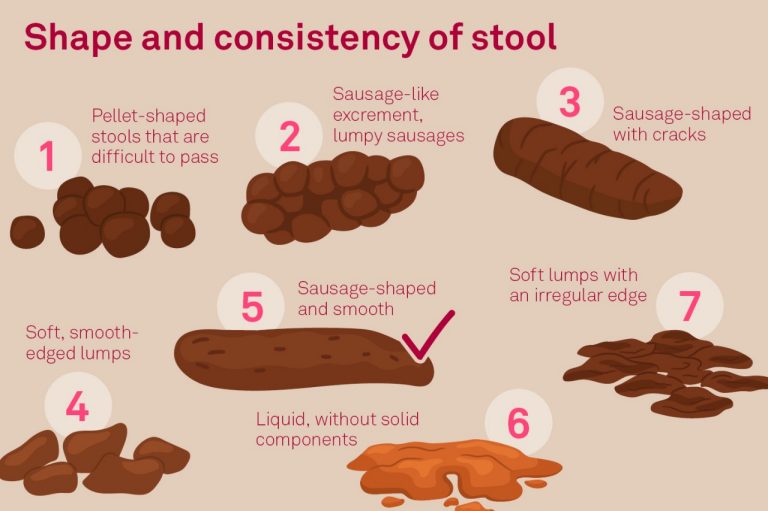
1. Pellet-shaped stools that are difficult to pass
Hard, pellet-shaped stools could indicate constipation, often because the body is lacking fluids. Not getting enough dietary fibre can also cause type 1 stools, although it can happen if you eat a lot of dietary fibre but don’t drink enough fluids. Another potential cause is not getting enough exercise, for example when you spend long periods sitting on a plane or at a desk.
Stools with small, hard pellets tend to be at the lower end of the scale in terms of volume and are difficult to pass. You’re also often left with the feeling that your bowels aren’t quite empty, even though you’ve just been to the toilet.
2. Sausage-like, lumpy stools
This type of stool also indicates constipation, albeit to a lesser degree than with type 1. As such, these stools are slightly easier to pass. The causes are the same, ranging from dehydration to diet. You can find out what you can do to help your bowels in the tips below.
3. Sausage-shaped stools with cracks
Everything is in the normal range. These stools range from firm to soft, and you should have no difficulty passing them.
4. Sausage-shaped stools with a smooth surface
Everything is as it should be in this case as well. These stools tend to be slightly softer.
5. Soft stools with smooth lumps
Type 5 is considered to be on the borderline between normal and loose stools. Stools like these are easy to pass, and the lumps don’t stick together. Generally speaking, there’s no cause for concern here.
6. Soft stools with lumps and ragged edges
You have diarrhoea. Your body is losing a lot of water, and these stools are very easy to pass. Make sure you drink plenty of fluids, and see a doctor if the diarrhoea lasts longer than three days, is very severe or is accompanied by abdominal pain or fever.
7. Watery stools with no solid pieces
Again, you have diarrhoea, often triggered by a gastrointestinal infection. Your body will be losing a lot of fluids as a result, so make sure you drink plenty of water. If the diarrhoea persists for a longer period or if it occurs regularly, speak to your doctor. They might also want to examine your gallbladder and pancreas, as both play a part in digestion.
How often a baby has a bowel movement depends on their age and diet. Every child follows their own rhythm.
- During the first few weeks: should a newborn be having a bowel movement every day? As a rule, yes – often several times a day. In breastfed babies, stools are paste-like or liquid. If your baby drinks formula from a bottle, their stools will usually range from mushy to firm.
- From around six weeks: the frequency of a child’s bowel movements will vary more widely from this point onwards – five times a day is just as normal as once every five days.
- When introducing solids: once your baby starts eating their first purées, their bowel movements will settle into a more regular rhythm. They’ll then have a bowel movement once or twice a day. Their stools will now be firmer and darker.
Firm stools alone are no cause for concern in babies. However, do keep an eye on your child if you notice them straining or crying while passing stools and if they consistently pass hard, dry stools. Talk to your paediatrician if this is the case.
What does the colour of our stools say about our bowel movements?
A healthy stool is typically light brown to dark brown. If the colour differs in any way, it’s often due to diet. Occasionally, however, there could be an underlying medical condition. We’ve classified the different colours of stool below.
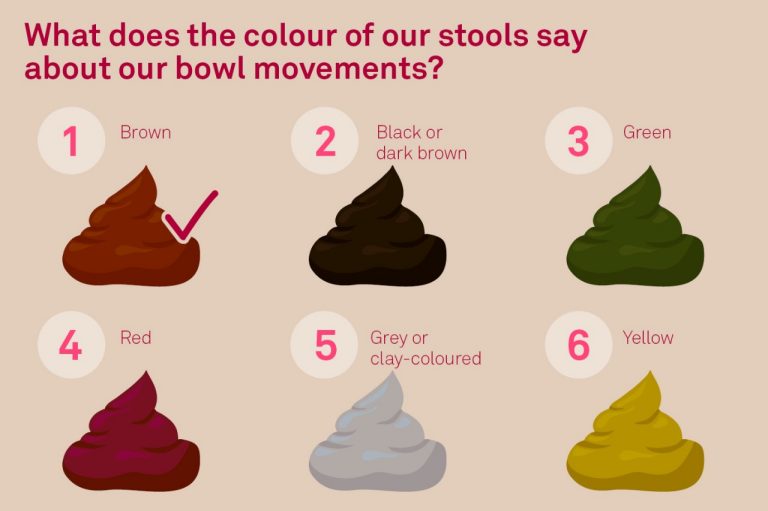
1. Light brown to dark brown stools
This is what a healthy stool should look like. The brown colour is produced when intestinal bacteria break down the pigment in bile.
2. Black or dark-brown stools
Often, the cause is harmless here; for example, charcoal or iron supplements are known to darken stools. However, if your stools are jet-black, sticky and shiny like tar, this may indicate bleeding in the upper digestive tract. This usually means the stomach or parts of the small intestine are affected. If this is the case, see a doctor immediately. This also applies if dark colouration persists for a longer period.
3. Green stools
Green vegetables such as broccoli, spinach and kale are often the culprits here. Green food colouring – in syrup or ice lollies, for example – can also leave a trace.
Another possible reason is that the colonic transit time is simply too short. When chyme passes through the large intestine too quickly, your intestinal bacteria don’t have enough time to break down the bile pigment, meaning the digested food retains its green colour. This is exactly what happens with diarrhoea. However, green diarrhoea can also indicate an intestinal infection. If it’s accompanied by a fever or cramps, speak to a healthcare professional.
4. Red stools
If you’ve eaten beetroot or cranberries or drunk tomato juice, there’s no need to worry. Otherwise, there’s most likely blood in your stool. Bright red blood usually comes from the lower part of the digestive tract, i.e. from the colon or rectum. This is often caused by enlarged haemorrhoids, which are swollen vascular cushions around the anal opening. Sometimes, a small tear in the mucous membrane is also to blame. Experts refer to this as an anal fissure. However, blood in your stools can also indicate polyps – growths on the intestinal mucosa – bowel cancer or chronic inflammatory bowel disease. That’s why it’s important to seek medical advice straight away if you do notice blood in your stools.
5. Grey or clay-coloured stools
Grey, clay-coloured or whitish stools suggest a lack of bile. This is what otherwise gives stools their brownish colour. If something is blocking the bile duct – such as gallstones – this prevents the bile from reaching the intestine.
Occasionally, however, it may be caused by medication. Antacids containing aluminium hydroxide can lighten the colour of your stools, as can some remedies for diarrhoea. Barium sulphate, a contrast agent for X-rays, also turns stools whitish for a short time. If the light colour persists, make an appointment at your doctors’ office as soon as possible.
6. Yellow stools
Foods that contain a lot of turmeric can turn your stools a yellowish colour. They may have an orange tint after you’ve eaten things like carrots, pumpkin or sweet potato – this is due to the plant pigment beta-carotene. Some heartburn remedies and certain antibiotics can also turn stools orange. However, if your stools are orange and you have diarrhoea, this may be due to an intestinal infection.
If your stools have a greasy sheen, smell foul and float, this means your intestine is not absorbing the fat from your food properly. One possible cause is coeliac disease, an autoimmune disorder triggered by the protein gluten. A chronically inflamed pancreas can also cause “fatty stools”. This is often accompanied by flatulence, diarrhoea and weight loss. Speak to your doctor if you experience these symptoms.
The smell of your stools
Stools always smell unpleasant. What you need to watch out for are any stools with a pungent, foul odour that smell significantly different from usual – and when this persists for several days.
Undigested fat is often to blame here. Experts refer to this as malabsorption, when the intestine doesn’t absorb nutrients from food properly. Possible causes include chronic inflammation of the pancreas or an excess of bacteria in the small intestine. Both can interfere with fat digestion and alter the smell of your stools.
If you’ve been travelling, you may have picked up a parasite. One example is Giardia, which causes foul-smelling diarrhoea, often only days or weeks after infection.
Note the smell for a few days. If it remains particularly foul or pungent, consult your doctor. If you also experience a fever, blood in your stools, night-time complaints or weight loss, contact your doctor immediately.
Warning signs in your stools: when should you see a doctor?
Minor variations in the colour or shape of your stools are a normal part of the digestive process. However, you should speak to your doctor if you notice any of the following symptoms:
- Blood or pus in your stools
- Persistently bright or clay-coloured stools
- Mucus in your stools
- Pain when passing stools
- Frequent bowel movements in small amounts (these may be due to Crohn’s disease, a chronic inflammatory bowel condition)
- Explosive bowel movements after eating (these may be due to a food intolerance or irritable bowel syndrome)
- Floating stools (these may be due to a disorder of the pancreas)
- Narrow (pencil-thin) stools
- Fever accompanied by diarrhoea
- Unexplained weight loss
- Persistent abdominal pain
Make a note of a few points before your appointment: When did you first notice the change? What do your stools look like, and how often do you go to the toilet? You should also make a note of what you’ve eaten over the last few days and any medication you’re taking. All this information will help with the diagnosis.
Tips on maintaining regular bowel movements
The basis for regular bowel movements is a balanced diet.
Dietary fibre has the biggest impact here. It can be found in plant-based foods such as whole grains, vegetables, fruits, beans, lentils, seeds and nuts. Your body can’t digest dietary fibre, which means it reaches the large intestine intact. Once there, it binds water, softens the stools and stimulates bowel movements. The Swiss Society for Nutrition (SSN) recommends 30 grams of dietary fibre per day for adults between the ages of 18 and 65. Most people in Switzerland fall short of this target. Here’s how to incorporate more dietary fibre into your meals:
- Instead of adding, try swapping: opt for wholemeal bread, wholemeal pasta and brown rice instead of white flour products. Even changing the type of bread you eat can make a big difference. For breakfast, porridge or unsweetened muesli are better choices than sugary cornflakes. It’s also best to eat potatoes with their skins on.
- Don’t neglect your legumes: lentils, chickpeas and beans are some of the most fibre-rich foods around. Try adding a handful of chickpeas to your salad, mixing some red lentils into a tomato sauce or using hummus as a spread. Tinned beans and lentils are often easier to digest if rinsed properly, making them a great way to get started.
- Make fruit and vegetables part of every meal: as a rule of thumb, you should be aiming for five portions a day – three portions of vegetables and two portions of fruit. Eat fruit whole instead of drinking it as juice. Carrots or kohlrabi also make a great snack.
- Up your fibre dose wherever you can: try adding one or two tablespoons of flaxseed, chia seeds or oat bran to your muesli or yoghurt. You could also grab a handful of nuts or kernels next time you’re feeling peckish.
- Take it slow: if you suddenly start eating significantly more dietary fibre from one day to the next, you’re likely to experience some flatulence. That’s why you should aim to build up your intake gradually over the course of a few weeks.
- Make sure you stay hydrated: drink about 1.5 to 2 litres a day. You’ll need the extra fluids if you’re upping your fibre intake, especially for water-absorbing dietary fibres such as linseed or psyllium. Otherwise, they may actually be more likely to cause constipation.
Making sure you get enough exercise in everyday life helps with digestion. You could try going for a walk after eating, for example.
If you’re constipated: it’s quite common not to have a bowel movement every day, so don’t be too quick to reach for the laxatives. Start by following the tips above: get more dietary fibre, drink plenty of fluids and try to exercise every day.
If you have diarrhoea: your body will be losing a lot of fluids, so you should make sure you get enough to drink. The right diet for diarrhoea consists of easily digestible foods such as rusks, rice, oats and yoghurt. If the diarrhoea lasts longer than three days, is very severe or is accompanied by abdominal pain or fever, see a doctor.
If you’re aware of your own habits, you’ll be able to notice any changes early on. Most variations in bowel movements can be explained by what you’ve eaten over the last few days. Very few symptoms require medical attention. By ensuring you get enough dietary fibre, plenty of fluids and regular exercise, you’ll be doing your digestive system a favour every day. Then all you need to do is let your gut do its thing.

The expert provided the editorial team with advice and input for this article. Natalie Bez is a nutritionist (SVDE) and researcher at Bern University of Applied Sciences with a focus on obesity treatment, nutritional psychology and plant-based nutrition.


Newsletter
Find out more about current health issues every month and get all the information you need about our attractive offers from all Helsana Group companies * delivered by e-mail to read whenever it suits you. Our newsletter is free of charge and you can sign up here:
We did not receive your information. Please try again later.
* The Helsana Group comprises Helsana Insurance Company Ltd, Helsana Supplementary Insurances Ltd and Helsana Accidents Ltd.